MEP Milan Uhrík: EU credibility eroded by double standards after US strike on Minab schoolchildren
TEHRAN - More than two months have passed since a US Tomahawk missile struck the Shajareh Tayyebeh primary school in the southern Iranian city of Minab. The strike occurred on February 28, during the opening phase of the US–Israeli war, and claimed the lives of 168 people, most of them schoolchildren. The attack has been widely condemned as one of the deadliest incidents involving children in modern warfare and has intensified calls for accountability.
Last week in Brussels, dozens of activists and protesters gathered outside the Iranian Embassy to commemorate the victims, holding placards reading “The Angels of Minab — Children Who Never Returned Home from School” and “Europe Mourns with Iran,” while calling for an end to the killing of children and greater respect for international humanitarian law.
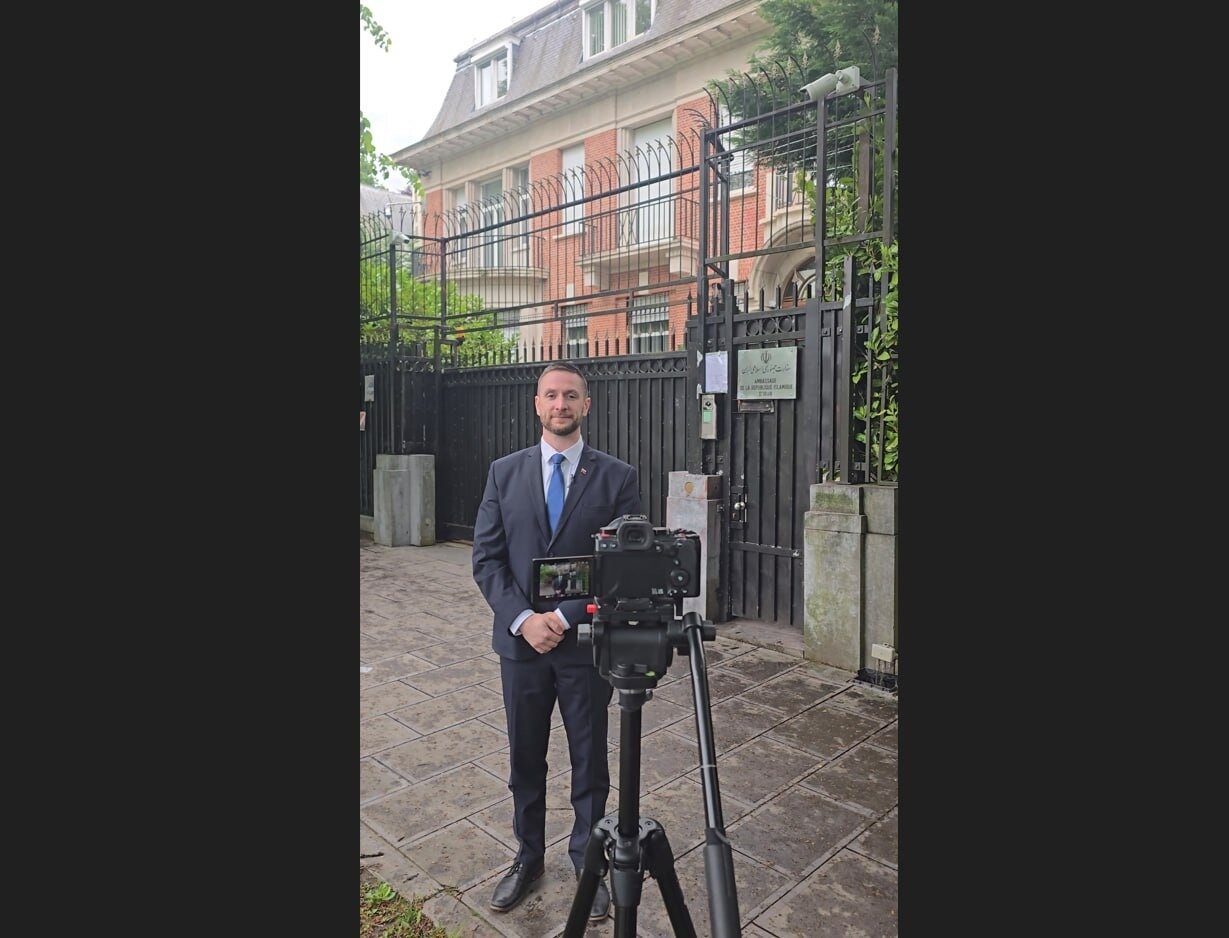
Speaking outside the embassy, Slovak Member of the European Parliament Milan Uhrík denounced the attack. In an exclusive interview with the Tehran Times this week, Uhrík reiterated his condemnation of the tragedy. The European parliamentarian said attacks on innocent schoolchildren must be unequivocally condemned and that civilian deaths demand international attention. He also stressed that the European Union’s credibility depends on the consistent and non-selective application of international humanitarian law, particularly in the protection of children. The full interview follows below.
At the memorial outside the Iranian Embassy in Brussels, you strongly condemned the Minab school attack. What did you observe at that gathering that shaped your understanding of the tragedy and its emotional impact on Europe?
The memorial was marked by deep grief, solidarity, and a strong sense of urgency. There were families, activists, and members of the diaspora standing together in silence, many visibly shaken by the attack on innocent schoolchildren. It was a powerful reminder of the need to condemn terror and defend human dignity. Regardless of any politics or geopolitics, such attacks need to be condemned, and the lives of children need to be protected all around the world.
Dozens of activists attended the memorial with messages such as “Europe Mourns with Iran.” How do you assess the role of these activists in exposing the Minab tragedy and pushing European institutions to take the issue seriously?
The tragedy in Minab should not be ignored or reduced just to headlines. The presence of these people, testimonies, and symbolic gestures gave a human face to the suffering of the victims. It reminded European institutions that civilian deaths, especially those of children, demand international attention.
What message do you hope the memorial sends to the families of the victims in Iran, especially the parents of the schoolgirls who never returned home?
No parent should ever have to bury a daughter who left for school and never returned home. Beyond politics, this is a human tragedy, and every victim deserves remembrance, dignity, and a credible search for truth and accountability.
Field reports mention missile debris with American markings. What obligations would this place on the European Union regarding accountability and transparency?

Students at the University of California, Berkeley, hold a candlelight vigil for the schoolchildren killed in the US airstrike on Shajareh Tayyebeh elementary school
If credible investigations confirm the presence of missile debris with these markings, it would raise questions about the chain of supply, oversight, and compliance with international law. If weapons linked to this production were used in an unlawful strike against civilians, institutions should demand clarity, ensure proper scrutiny of arms transfers, and reaffirm that humanitarian law applies equally to everyone.
You have compared the Minab attack to patterns of civilian targeting in Gaza, Lebanon, and Beirut. How does this incident fit into that broader pattern of military behavior?
The tragedy reflects a deeply troubling pattern we have witnessed in several recent conflicts, where civilian areas, including schools, hospitals, residential neighborhoods, and critical infrastructure, have repeatedly become sites of mass casualties. These incidents raise urgent concerns about proportionality, distinction between civilian and military targets, and the protection of noncombatants under international law.
You have criticized the EU for “passivity” and “double standards.” What prevents European institutions from applying the same human rights standards to all conflicts, including those involving US or Israeli actions?
Too often, the credibility of European human rights policy is weakened by geopolitical considerations and selective political courage. These principles must be applied consistently, regardless of whether violations are committed by adversaries, allies or strategic partners. Otherwise, it creates the perception of the mentioned double standards.
Do you believe the EU’s reluctance to confront Washington and Tel Aviv undermines Europe’s credibility when it speaks about protecting civilians and international law?
The credibility of the EU is weakened when its commitment to international law appears selective or inconsistent. Consistency is essential for maintaining trust in the international legal order and in Europe’s own declared values.
One of the Tehran Times’ most viral headlines was “Trump: Look Them in the Eye,” accompanied by a front-page photo of the children killed in the Minab school attack. Do you believe European media have failed to give adequate attention to the deaths of the schoolgirls? If so, what explains this silence?

I do believe that many media outlets have not devoted the same level of sustained attention to the deaths of these schoolgirls as they would to comparable tragedies elsewhere. Part of the reason is geopolitical sensitivity and the tendency to view conflicts through strategic narratives. Most of the media space here in Europe is also shaped by political priorities, editorial caution, and concerns about challenging dominant international actors.
What reforms do you believe are urgently needed in Europe’s approach to protecting children in conflict zones?
The European Union needs structural and institutional reforms. In the manner of foreign policy and diplomacy, the bloc needs a more consistent framework without double standards, with more concentration on the protection of children, oversight of arms transfers, and humanitarian monitoring. As we say about the protection of children, this topic should be a non-negotiable principle of human approach applied to all conflicts without exception.
Leave a Comment